ADVERTORIAL
VISION & WELLNESS
Scientists Found Microplastics in an Unexpected Place: Inside the Human Eye
If small print, nighttime glare, or phone screens are becoming harder to navigate, a recent finding inside the human eye is raising new questions—and new interest in the five marine-derived nutrients behind the OptiPlax vision-support formula.
Published by Pure Life Choices · Advertorial

When reading feels harder and nighttime glare becomes more noticeable, “just getting older” may not feel like a complete answer. Illustrative image.
It often begins with small frustrations: a menu or phone held farther away, headlights that flare after dark, a familiar face that looks less distinct across the room, or words that seem to blur together on the page.
Most people blame age, fatigue, lighting, or an outdated prescription. But researchers recently reported something few expected: five types of microplastics inside human aqueous humor—the clear fluid in the front portion of the eye.
The finding opened an uncomfortable question: if microscopic plastic can reach the eye, where is everyday exposure coming from—and what can the eye do to defend itself against daily environmental stress?
The Everyday Exposure Question

Pillows, bedding, upholstery, and clothing can release microscopic fibers into the surrounding environment. Illustrative image.
Plastic is woven into modern life. Food packaging, bottles, upholstery, clothing, bedding, and countless household products can release particles far too small to see. Some remain airborne; others may be inhaled, swallowed, or settle on exposed surfaces.
Researchers are still working to understand the pathways by which microplastics can reach ocular fluid—and what repeated everyday exposure could mean over time.
But the discovery has also renewed interest in the natural defenses delicate eye tissues use against oxidative stress, and in the nutrients being studied to support those defenses.
The official OptiPlax presentation positions its once-daily formula as nutritional support for the eye’s natural cleansing and protective processes, bringing together five marine-derived ingredients.
From an Environmental Question to a Vision-Support Approach

For years, microplastics were discussed mainly in relation to oceans, food, and drinking water. Detecting them in ocular fluid made the subject feel far more personal.
At the same time, researchers have been examining marine-derived nutrients for their antioxidant profiles and their potential role in supporting normal visual function.
That connection—from environmental exposure to the eye’s nutritional defenses—is where the OptiPlax approach begins.
When Vision Changes Begin Taking More Than Clarity
Vision is tied to independence in ways most people notice only when ordinary moments become harder: reading a medication label, driving after dark, recognizing a loved one across a room, following a recipe, or enjoying a book without strain.
The hardest part is not simply holding the page farther away. It is wondering whether the next change will mean giving up another piece of the life you enjoy.
That is why many people want more than another temporary adjustment. They want to understand what may be changing—and what nutritional support options are available.
The Marine Nutrients Behind the OptiPlax Formula
Marine organisms survive in environments exposed to intense oxidative pressure. That has led researchers to study carotenoids and algae-derived compounds—including astaxanthin—for their antioxidant profiles and potential role in supporting normal visual function.
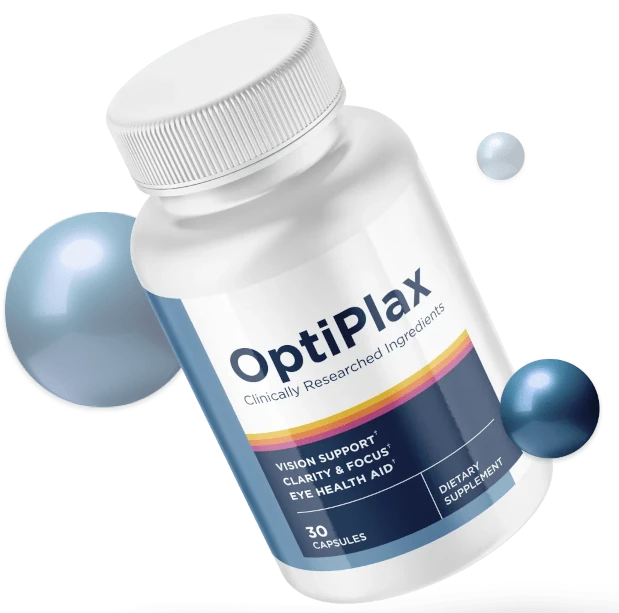
OptiPlax brings five marine-derived ingredients together in a once-daily dietary supplement: kelp, wakame, astaxanthin, chlorella, and Ecklonia cava.
Its official text presentation explains how the formula is positioned, what each package includes, the available bonuses, shipping options, and the 60-day money-back guarantee.

What You’ll Find on the Official OptiPlax Page
- The five marine-derived ingredients included in the OptiPlax proprietary blend.
- How the formula is positioned to support normal eye health, visual clarity, and focus.
- The available bottle packages and current pricing.
- The free bonuses and shipping options included with selected packages.
- The details of the 60-day money-back guarantee.
The next page is the official OptiPlax text presentation and commercial offer. It identifies the product, five marine-derived ingredients, multiple-bottle package options, current pricing, shipping terms, bonuses, and the 60-day money-back guarantee so you can review the complete offer before deciding.
Review the Official OptiPlax Details at Your Own Pace
If harder-to-read print, nighttime glare, or phone screens have made you more conscious of protecting your independence, the official page lets you review the OptiPlax daily vision-support formula, ingredient blend, package options, and guarantee in writing—at your own pace.
Frequently Asked Questions
Clear answers about the research context, the OptiPlax formula, and what appears on the official product page. Click a question to expand it.
What did researchers actually find in the human eye?
A peer-reviewed study reported several types of microplastics in human aqueous-humor samples. The finding documented their presence and opened new questions about exposure pathways and ocular health; it did not prove that the particles caused a particular symptom or disease.
Does this prove that pillows or clothing damage eyesight?
No. Everyday textiles can release microscopic fibers, but current evidence does not establish that a pillow or item of clothing causes vision loss. The subject remains under investigation.
Why are marine compounds being discussed?
Marine-derived carotenoids and algae compounds are studied for antioxidant properties and normal eye-health support. Research on individual nutrients does not prove that a finished supplement treats an eye disease or produces a specific result.
Should vision changes be evaluated by a professional?
Yes. New, sudden, painful, one-sided, or persistent vision changes should be evaluated promptly by a qualified eye-care professional. Online content and supplements do not replace diagnosis or treatment.
What will the linked OptiPlax page show?
The seller's official text page introduces OptiPlax, lists its ingredients, explains the available bottle packages, bonuses, shipping terms, and 60-day guarantee, and includes a commercial offer.
PURE LIFE CHOICES
- Pure Life Choices
- purelifechoices.com
Important Links
© Copyright 2026 Pure Life Choices. All rights reserved.
IMPORTANT DISCLOSURES: This page is an advertorial and contains affiliate links. The linked third-party presentation discusses OptiPlax, a dietary supplement. Pure Life Choices is not the manufacturer or seller. Product claims, payment, fulfillment, refund, and support terms are provided by the third-party seller.
Listed proprietary-blend ingredients: kelp, wakame, astaxanthin, chlorella, and Ecklonia cava. Confirm the current Supplement Facts label, directions, allergens, and other ingredients on the seller’s website.
HEALTH & REGULATORY DISCLOSURE: OptiPlax is marketed as a dietary supplement. Under U.S. law, dietary supplements are not subject to FDA premarket approval for safety or effectiveness. These statements have not been evaluated by the Food and Drug Administration. This product is not intended to diagnose, treat, cure, or prevent any disease. This advertorial is for general informational purposes, does not provide medical advice, and is not a substitute for medication or treatment prescribed by a qualified healthcare professional. Consult a physician before using OptiPlax or any dietary supplement. Individual experiences may vary.
Research context: Detecting microplastics in ocular samples does not establish that they caused a symptom or disease. Research on individual nutrients does not prove that OptiPlax removes plastic from the eye or produces a specific result.
Microplastics in human aqueous humor: https://pubmed.ncbi.nlm.nih.gov/40124479/
Review of microplastics and the ocular surface: https://pubmed.ncbi.nlm.nih.gov/36835339/
Astaxanthin and visual-display use: https://pubmed.ncbi.nlm.nih.gov/36777084/
Publisher disclaimer and affiliate disclosure: https://purelifechoices.com/disclaimer/